Where are the Joneses – Work from the archive

One of the most demanding projects I have lead was for Ford, whilst I was based at Imagination.  I was brought on board to create a far reaching social media platform, at the time when WordPress and Wikis were still very much in their infancy from a public consciousness perspective.

Ford wanted to utilise social media to engage with people in a more genuine manner than just pitch sales messages and thereby establish a closer connection between audience and brand.
WRTJ 3

The aim of the project was to tell a  story and inviting readers to contribute to it, thus making them feel engaged, rather than “talked at”.

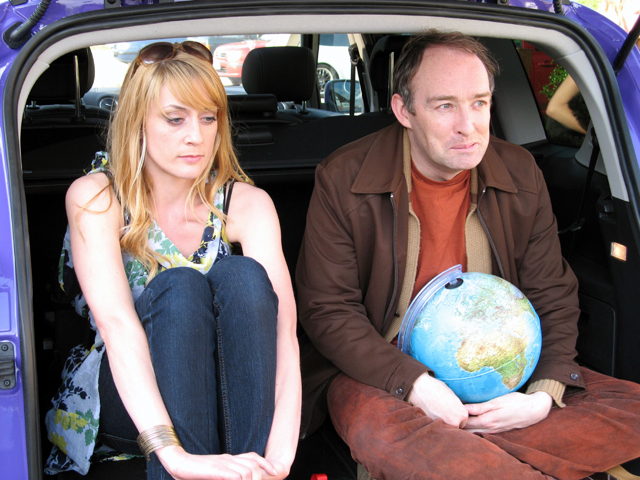
The result was an interactive online comedy called “Where Are The Joneses?”, which followed the adventures of two characters, Dawn and Ian Jones, who were searching for siblings after learning that their father was a prolific sperm donor.

Accompanied by my film crew, the cast improvised an episode a day on a 3 month European road-trip.  We asked Ford to provide a car fit for the journey and paint it in the pantone derived from the colour used by Seth Godin’s book, Purple Cow, about transforming your business by being remarkable.

WRTJ 7

Each episode was uploaded to our WRTJ channel on YouTube and discussed in an accompanying blog, hosted on WordPress, which featured videos from viewers, images, diaries written by the characters and audience comments. (www.wherearethejoneses.com)

The wiki allowed the audience to help shape the storyline, write the script, create new characters and even cast themselves to appear in the show. It was distributed widely across social networking sites to maximise audience participation, utilising everything from Facebook to Twitter, GoogleMaps, Flickr, Digg, Technorati, Del.icio.us, iTunes and MySpace amongst others.
WRTJ 16

The result was extensive coverage in mainstream media, both UK national and trade press as well as national TV coverage.  This helped to set the campaign up as a rewarding articulation of Ford’s brand positioning “Feel the difference.  It also earned the project a Webby nomination.

This is Episode 1 that started the whole European adventure off and introduced us to Dawn and Ian.

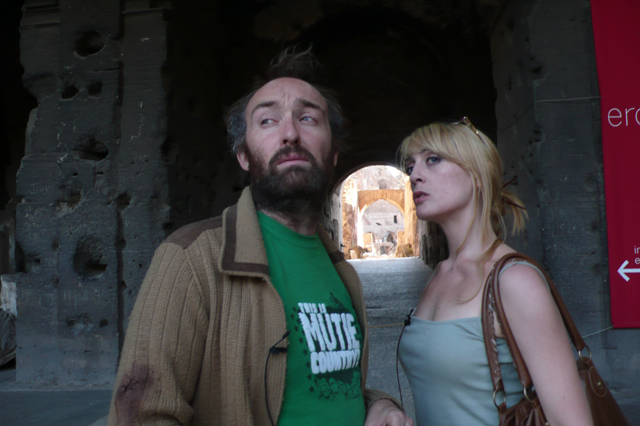
Here are some images from the three month production.

Dangerous animals en route

Courtesy of BabyDinosaur on Flickr

I think I have decided upon where I am going to journey this summer.  Although I love Iceland and would love to circumnavigate the island, my original desire to cycle to Nordkapp is captivating me more.  I love the idea of travelling through Europe’s last true wilderness.

Due to the nature of where I intend to go, it will be necessary for me to wild camp on a regular basis.  To this end, I have been looking further into what treats may lay ahead for me if I pursue this course.  As I delve deeper into researching my route through Scandinavia, I have started to uncover something that I had not contemplated before, dangerous animals.  It was actually in conversation with a Swedish friend last night that alerted me to the perils that I might encounter on the road.  The list runs from nuisances, such as mosquitoes hordes, which are particularly prevalent in the north during the summer.  Although they are most active around dawn and sunset, I will be north of the Arctic Circle for a couple of weeks, truly in the land of the Midnight Sun.  So, this means that if I camp along the way, I am likely to be under attack most of the night.

Other insects that may provide me with issues are Gadflies, with painful but mercifully non-poisonous bites.  In addition, Sweden is home to large plagues of wasps, so I will need to be careful with any foodstuffs that may attract them.  A more serious issue will be ticks, widespread in southern Sweden and northern coastal regions.  Ticks can transmit Lyme’s disease and more serious TBE (tick-borne encephalitis) through a bite.  I have the choice of either staying inland with the mosquitoes or on the east coast with the ticks.  Tough choice…

Sweden does have a venomous snake, the European adder.  Fortunately, the snake is not very common, although ubiquitous throughout Sweden except for the north.

Then there are the top two mammals on the bloc; the brown bear and the wolf.  This worried me considerably as I will be headed through the areas where both species are most commonly located.  I did take solace in the fact that bears in Sweden have killed no more than a handful of people since 1900 and that wolves have not killed a human being since 1821.  This information was marred by the accompanying caveat of how to deal with a bear encounter in the woods.  Evidently, the done thing is to walk slowly away from it whilst talking loudly.  This I could probably muster.  The tough bit is what to do in the event of a bear attack; the answer, to play dead, protect your head and make yourself as small as possible.  However, once could adopted the opposite approach and start screaming as loud as possible at the creature, jumping and making oneself as large as possible.  Always a worry to be presented with such conflicting options.

I just read an article that brown bears mate between May and June. During this period bears are active both at night and during daylight hours. Young males are searching for females at this time and cover long distances in their search, while last year’s cubs are making their first independent forays into the world.  I am likely to be on the road towards the end of this period, so I will be vigilant.

To round up then, I will have to be acutely aware of various animals including the brown bear, wolf, moose, wolverine, lynx, the very rare Arctic fox, reindeer and perhaps even the golden eagle.  Don’t misunderstand me, I’d love to see all of these animals, just from a safe distance and not whilst trying to sleep in my tent, completely along in the absolute middle of nowhere.  Then, I may take issue with such beasties dropping by for a snack, which could ultimately turn out to be me!

File:Saami Family 1900.jpg

Putting all of this jeopardy to one side, one of the truly exciting parts of the expedition will be once I reach Lapland, or Sápmi, on the northern side of the Arctic Circle.  Here lies the ancestral home of the Sámi, or Lapps, indigenous people of the region.  The Sámi people are among the largest indigenous ethnic groups in Europe.  They are renowned for tended their herds of hardy reindeer for millennia.  I aim to visit an old Sámi settlement to find out more about their culture and way of life.  I may even succumb to the touristy urge to stay in a traditional Sámi tepee. It should all make for some stunning photography.